
Key points:
- How mindfulness for autism builds self-regulation and present moment awareness in children who struggle to manage their internal states.
- What breathing exercises, calming practices, and attention training look like when adapted for autistic learners.
- Practical ways parents can introduce meditation for kids and mindfulness routines into everyday life without forcing or overwhelming.
A child who cannot settle their body cannot access learning. A child who cannot notice what they are feeling cannot begin to manage it. For autistic children, these capacities, the ability to pause, observe internal experience, and respond rather than react, are often the missing foundation beneath every other skill being worked on in therapy and at school.
Mindfulness is the practice of paying deliberate, non-judgmental attention to the present moment. It is not a spiritual practice or a personality trait. It is a trainable skill set with a growing body of research behind it, including studies specifically examining its use with autistic children and adolescents.
This article explains what mindfulness for autism actually involves, how it supports self-regulation and attention, and how families can begin building these practices into daily life in ways that feel accessible rather than forced.
What Mindfulness Means for Autistic Children
Standard mindfulness programs were not designed with autistic children in mind. Many rely on abstract language, sustained sitting, eye closure, and verbal self-reflection, none of which map easily onto autistic learning profiles. The good news is that the core principles of mindfulness translate well once the delivery is adapted.
Research shows that increases in self-regulation difficulties are associated with smaller gains in cognitive skills, regardless of a child’s verbal ability. Studies also indicate a reciprocal relationship: improvements in cognitive skills can contribute to better self-regulation over time. These findings suggest that interventions targeting self-regulation may be beneficial for all children with autism and should be thoughtfully adapted to support minimally verbal children as well.
For autistic children, mindfulness practice typically looks like:
- Short, structured activities with clear beginnings and endings
- Concrete anchors, such as breath, body sensations, or sounds, rather than abstract imagery
- Visual supports that make the practice predictable and easy to follow independently
- Movement-based practices that allow the body to be active rather than still
- Sensory-based exercises that use familiar input as a focus point
The goal is not to achieve a particular state of calm. It is to build the habit of noticing, which is the foundation that all self-regulation depends on.
Self-Regulation and Why It Is So Hard
Self-regulation is the ability to manage one’s own physical, emotional, and cognitive states in response to the demands of a situation. It includes everything from staying focused during a boring lesson to recovering after a disappointment to tolerating a noisy cafeteria without shutting down.
For autistic children, self-regulation is harder for several overlapping reasons:
- Sensory processing differences mean the nervous system may be more easily overwhelmed or under-responsive
- Interoception, the sense of internal body states, is often less reliable, making it harder to notice the early signals of dysregulation
- Executive function challenges reduce the capacity to pause, evaluate, and choose a regulated response
- Anxiety and emotional intensity can escalate quickly once a threshold is crossed
Mindfulness builds self-regulation by strengthening interoceptive awareness, the ability to notice what is happening inside the body before it becomes a crisis. A child who can feel tension building in their chest at a level three has far more time to use a coping strategy than one who only notices at a level nine.
Breathing Exercises That Actually Work
Breathing is one of the most direct ways to influence the nervous system. Slow, deliberate breathing activates the parasympathetic nervous system, the body’s rest and recovery mode, which counteracts the physiological state of anxiety and agitation.
For autistic children, abstract instructions like take a deep breath rarely land without more structure. Named, visual breathing techniques work far better:
- Box breathing: inhale for four counts, hold for four, exhale for four, hold for four. The visual of a square traced with a finger gives the breath a concrete shape to follow.
- Balloon breathing: the child imagines their belly as a balloon, slowly inflating on the inhale and deflating on the exhale. Simple and effective for younger children.
- Finger breathing: the child traces up the side of one finger while inhaling and down the other side while exhaling, moving finger by finger across one hand. This combines breath with tactile input.
- Smell the flowers, blow out the candles: inhale slowly through the nose as if smelling flowers, exhale slowly through the mouth as if blowing out birthday candles. The imagery makes the pacing natural.
These exercises should be practiced daily during calm moments, not introduced for the first time during a meltdown. Familiarity is what makes them accessible under stress.
Present Moment Awareness Activities for Kids
Present moment awareness is the core of mindfulness. It means noticing what is happening right now, in the body and in the immediate environment, without getting pulled into worry about the past or future.
For autistic children, present moment awareness can be anchored in sensory experience, which is often a more reliable entry point than thought-based reflection.
Activities that build present moment awareness include:
- The 5-4-3-2-1 grounding exercise: name five things you can see, four you can touch, three you can hear, two you can smell, and one you can taste. This guides attention through the senses systematically.
- Mindful eating: focusing on the color, texture, smell, and taste of a preferred food one bite at a time. Many autistic children find this easier than breath-focused practices.
- Sound mapping: sitting quietly and naming every sound the child can hear, near and far. This trains sustained, non-reactive attention.
- Mindful movement: slow, deliberate movement such as yoga, stretching, or tai chi done with attention to how the body feels. This is especially helpful for children who struggle to sit still.
- Nature observation: sitting outside and noticing details in the environment without judgment or commentary. Many autistic children find nature grounding and less socially demanding.
Short, repeated practice over weeks and months builds genuine present moment awareness. Five minutes a day is more valuable than an hour once a month.
Attention Training Through Mindfulness
Attention is not a fixed capacity. It is trainable. Research on mindfulness-based attention training shows that consistent practice strengthens the ability to focus, sustain attention, and redirect the mind after it wanders.
For autistic children who struggle with attention in academic settings, mindfulness-based attention training offers an approach that does not rely on medication and builds a skill rather than compensating for a deficit.
The core mechanism is simple: focus attention on a chosen anchor, notice when it wanders, and gently return. Repeat. Each return is a repetition of the attention muscle. Over time, the mind becomes more skilled at staying and redirecting.
Attention training activities suited to autistic children include:
- Listening to a single instrument within a piece of music and tracking it through the song
- Watching a candle flame or a lava lamp and maintaining focus for a set time
- Timed breathing practice with a visual timer, gradually increasing duration week by week
- Special interest focus activities, such as detailed observation of a favorite object or drawing with full attention to the process
The attention skills built through mindfulness practice generalize. Children who practice sustained attention during calm, preferred activities begin to bring more of that capacity to academic and social demands.
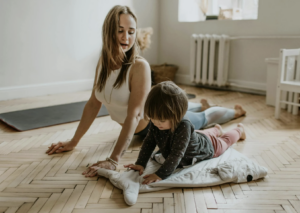
Meditation for Kids Without the Struggle
The word meditation can put parents off before they even try it. It sounds like it requires sitting still, staying quiet, and having a calm mind, none of which come easily to many autistic children. The reality is that effective meditation for kids looks nothing like a traditional adult practice.
Starting points that tend to work well include:
- One to two-minute practice sessions at first, building duration gradually only when the child is comfortable
- Guided audio or visual supports that lead the child through each step without requiring them to self-direct
- Lying down or seated in a preferred position rather than insisting on an upright posture
- Incorporating a comfort item such as a weighted lap pad, stuffed animal, or sensory toy
- Framing practice around a preferred theme or character to increase motivation
Consistency matters more than perfection. A two-minute breathing practice done every morning before school builds far more skill than an occasional longer session done only when a child seems ready.
Calming Practices to Build Into Daily Routines
The most effective calming practices are the ones that happen before the child needs them. Proactive regulation is always easier than reactive recovery.
Simple calming practices that fit naturally into daily structure include:
- A two-minute breathing exercise as part of the morning routine before school
- A sensory wind-down before bedtime, such as dim lighting, soft textures, and quiet music
- A transition ritual between activities, such as a brief stretch or a sip of water, to signal that one context is ending and another is beginning
- A quiet decompression period after school, before homework or activities begin
- A brief check-in at the end of the day, where the child names one thing they noticed in their body or feelings
These small practices accumulate. Over weeks and months, they become the scaffolding of a regulated nervous system rather than isolated interventions used only in crisis.
Frequently Asked Questions
- Can mindfulness really help autistic children?
Yes. Research supports mindfulness-based interventions for reducing anxiety, improving attention, and building self-regulation in autistic children. The approach needs to be adapted to suit autistic learning styles, but the core practices are effective.
- What if my child refuses to sit still for mindfulness practice?
Sitting still is not required. Movement-based practices, sensory grounding activities, and very short structured exercises are all valid forms of mindfulness. Start with what the child will tolerate and build from there.
- How young can a child start mindfulness practice?
Children as young as three or four can engage with simplified breathing and sensory awareness activities. The complexity and duration of practice increases with age and developmental readiness.
- How does mindfulness support self-regulation in autism?
Mindfulness builds interoceptive awareness, which is the ability to notice internal body states early. This gives children more time and opportunity to use coping strategies before reaching a point of full dysregulation.
- How does mindfulness fit alongside ABA therapy?
ABA therapy teaches specific behavioral and communication skills. Mindfulness supports the internal regulation needed to access and generalize those skills across settings. The two approaches complement each other well when used together.
Regulation Is a Skill. It Can Be Taught.
Self-regulation does not develop by chance. It develops through practice, consistency, and the right kind of support. Mindfulness gives autistic children a set of tools to notice what is happening inside them and respond before things escalate. That capacity changes everything, from how they handle school to how they connect with family at home.
Cognify ABA Therapy works with families across North Carolina to build individualized programs that support self-regulation alongside communication, behavior, and social goals. We help children develop the internal foundation that makes every other skill more accessible.
Contact Cognify ABA Therapy today to learn how we can support your child’s self-regulation and help them build the calming practices they need to thrive every day.

 646-833-8411
 (888) 268-4675
 5540 Centerview Dr
Ste 200-244
Raleigh, NC 27606
5540 Centerview Dr
Ste 200-244
Raleigh, NC 27606 info@cognifyaba.com