
Key Points
- ABA helps children communicate needs and reduce frustration.
- Strategies like FCT and PECS support speech and non-speaking communication.
- In-home therapy builds skills during daily routines for real-life use.

Have you ever wished you could better understand what your child is trying to say, even when words are not coming easily?
If you are searching for “ABA communication autism North Carolina support”, you are likely looking for clear answers about why communication can be difficult for autistic children and how therapy can help.
Communication challenges can feel overwhelming, but with the right support, children can build meaningful ways to express themselves, connect with others, and gain independence.
Verbal and Non-Speaking Communication in Autism
Some autistic individuals are non-speaking or minimally verbal. This does not mean they cannot understand language.
- Verbal children use spoken language but may struggle with conversation flow
- Non-speaking children may use AAC (Augmentative and Alternative Communication) devices, gestures, or picture systems
- Many children move between communication methods depending on stress or environment
Support is always focused on building understanding, expression, and independence through individualized care.
Why Communication Can Be Challenging in Autism
Research shows that children with autism may experience communication differences for several reasons:
Nonverbal communication differences: Many children struggle with facial expressions, eye contact, gestures, and body language. This can make it harder to understand social cues or express needs clearly.
Literal interpretation of language: Children may take words exactly as they are said. Sarcasm, idioms, jokes, or figurative language can be confusing.
Social thinking differences (Theory of Mind): Understanding what others think or feel can be difficult. This affects conversations, especially in group settings.
Sensory processing challenges: Sounds, lights, or touch can feel overwhelming. When the brain is busy managing sensory input, it becomes harder to focus on communication.
Brain connectivity and speech planning differences: Research suggests differences in how language areas of the brain communicate, which may affect speech production and processing speed.
Echolalia and repetition: Some children repeat words or phrases they hear. This is a form of communication and can be a step toward developing flexible language.
Executive functioning challenges: Planning, organizing thoughts, and responding quickly in conversation can take extra effort.
Common Communication Signs in Autism
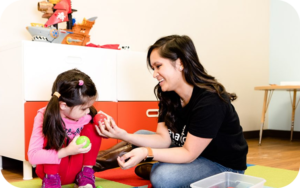
Families seeking speech ABA therapy in North Carolina often notice:
- Delayed speech or limited vocabulary
- Difficulty with turn-taking in conversation
- Reduced eye contact or pointing
- Echolalia (repeating words or scripts)
- Unusual tone, rhythm, or volume of speech
- Difficulty understanding gestures or tone of voice
- Using hand leading instead of words or pointing
- Strong preference for clear, direct language
It is important to remember that communication differences do not mean a lack of understanding or intelligence.
How ABA Strategies Support Communication Development
Applied Behavior Analysis (ABA) offers structured, evidence-based strategies that help children build communication step by step.
Functional Communication Training (FCT)
Teaches children to replace challenging behavior with functional communication, such as asking for help or requesting items.
Mand training (requesting)
Children learn to ask for what they need, which reduces frustration and increases independence.
Positive reinforcement
Communication efforts are rewarded with praise, toys, or access to preferred activities, encouraging continued use of skills.
Visual supports
Tools like picture cards, schedules, or communication boards support understanding and expression, especially helpful in AAC autism North Carolina approaches.
Natural Environment Teaching (NET)
Skills are taught during real-life moments like snack time, play, or routines at home.
Modeling and prompting
Therapists demonstrate communication skills and guide the child, gradually reducing help over time.
Discrete Trial Training (DTT)
Breaks communication into small steps for structured learning and repetition.
Augmentative and Alternative Communication (AAC)
Supports children who are non-speaking or minimally verbal using devices, signs, or picture systems.
Joint attention activities
Encourages shared focus during reading, play, or everyday interactions to build social connections.
Communication Goals ABA Therapy Can Support
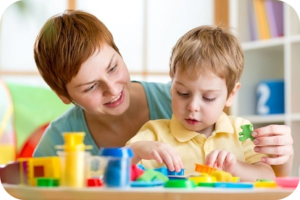
Families often see progress in:
- Reduced frustration and behavior challenges
- Increased vocabulary and word use
- Improved sentence formation
- Stronger social interaction skills
- Better ability to express needs and emotions
ABA Strategies in Practice: Reducing Tantrums with Functional Communication Training (FCT)
Imagine a child, Alex, who wants juice but cannot yet ask for it.
Before support:
Alex screams or pulls an adult toward the fridge.
With ABA communication strategies:
- A picture of “juice” is introduced
- The child is gently guided to use the picture
- The request is immediately rewarded
- Over time, prompts are reduced
- The child may begin using words instead of pictures
This process is known as Functional Communication Training and is a core part of our in-home ABA therapy. The result is not just fewer tantrums, but stronger communication confidence.
Helping Skills Generalize
To make sure communication skills are used in real life, we:
- Practice skills during daily routines like meals, dressing, and play
- Train parents and caregivers to use the same strategies at home
- Use multiple people and environments so skills are not tied to one setting or therapist
These approaches help children use communication skills confidently at home, school, and in the community.
Benefits of ABA Communication Therapy
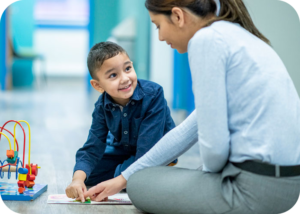
Benefits for Kids
- Expressing needs (manding): Children learn to request what they want, reducing frustration and tantrums.
- Improved communication skills: Supports speech, gestures, pointing, eye contact, and overall understanding.
- Labeling and social interaction (tacting): Helps children name objects, answer questions, and connect with others.
- Reduced challenging behavior: Replaces problem behaviors with functional communication skills.
- Greater independence: Builds confidence in daily routines and self-help skills.
Benefits for Families
- Less stress at home: Clearer communication leads to calmer, more predictable routines.
- Stronger relationships: Parents better understand their child’s needs and emotions.
- Easier daily life: Mealtimes, dressing, and transitions become smoother.
- Empowered caregivers: Parents learn practical ABA strategies they can use every day.
- Improved social life: Children gain skills to interact with peers and participate in activities.
The Cognify ABA Difference: Helping Children Communicate Effectively
At Cognify ABA Therapy, we bring therapy directly into your home so learning feels natural, comfortable, and part of everyday life.
We provide language development ABA support by turning daily routines into meaningful learning opportunities. Breakfast, playtime, and chores all become chances to build communication, social skills, and independence.
Our approach includes:
- Personalized ABA sessions targeted to your child’s strengths
- Natural environment learning in real home settings
- Support for both verbal and non-verbal communication
- Focus on functional communication and confidence building
- Consistent progress that fits into family routines
Families appreciate that our in-home therapy feels more natural and less stressful because it happens where children feel safest.
“Sessions at home feel playful yet focused. Our daughter now expresses herself with confidence during everyday routines.” — Anthony M., Montclair (Parent)

Find Support That Fits Your Family
We work with children who experience challenges in communication, social interaction, or emotional regulation. Every session is gentle, structured, and designed to support real-life progress.
Your child deserves to be understood and supported. With the right ABA communication approach, meaningful progress is possible.
Reach out today to learn how we can support your child’s communication journey and help them thrive at home and beyond.
FAQs
- What is ABA communication therapy for autism?
ABA communication therapy uses structured, evidence-based strategies to help children develop functional communication skills. This includes teaching children how to request, label, and interact using speech, gestures, or AAC tools, depending on their needs.
- How does ABA help with speech and language development?
ABA helps break communication into small, teachable steps and reinforces progress through positive reinforcement. Children learn skills like requesting (manding), labeling (tacting), and conversation building, which support overall language development.
- What if my child is non-speaking?
Non-speaking children can still learn to communicate effectively using Augmentative and Alternative Communication (AAC) tools such as Picture Exchange Systems (PECS), communication boards, or speech-generating devices. ABA supports both verbal and non-verbal communication pathways to build independence.
- How quickly do children make progress with ABA communication strategies?
Progress varies for each child depending on their needs, consistency of therapy, and support at home. Many families begin to notice small improvements in communication and behavior within the first few months of consistent therapy.
- Can ABA help reduce tantrums and frustration?
Yes. When children learn functional communication skills, they are less likely to use challenging behaviors to express needs. For example, learning to ask for help or request items often replaces frustration-based behaviors.
- Do parents take part in ABA communication therapy?
Yes. Parent involvement with us is an important part of ABA therapy. Families are taught practical strategies to support communication at home, helping children generalize skills into everyday routines and real-life situations. Contact us today to get started.



 646-833-8411
 (888) 268-4675
 5540 Centerview Dr
Ste 200-244
Raleigh, NC 27606
5540 Centerview Dr
Ste 200-244
Raleigh, NC 27606 info@cognifyaba.com